In most new houses the concrete frame (columns, beams and slabs) carries the load, and the walls fill the gaps between. That makes the choice of wall material mainly about cost, weight, heat, availability and the skill of your masons. In older load-bearing houses the walls carry the floors above, and the choice must come from your engineer.
The options compared
| Material | Standard | Typical size | Good for | Watch out for |
|---|---|---|---|---|
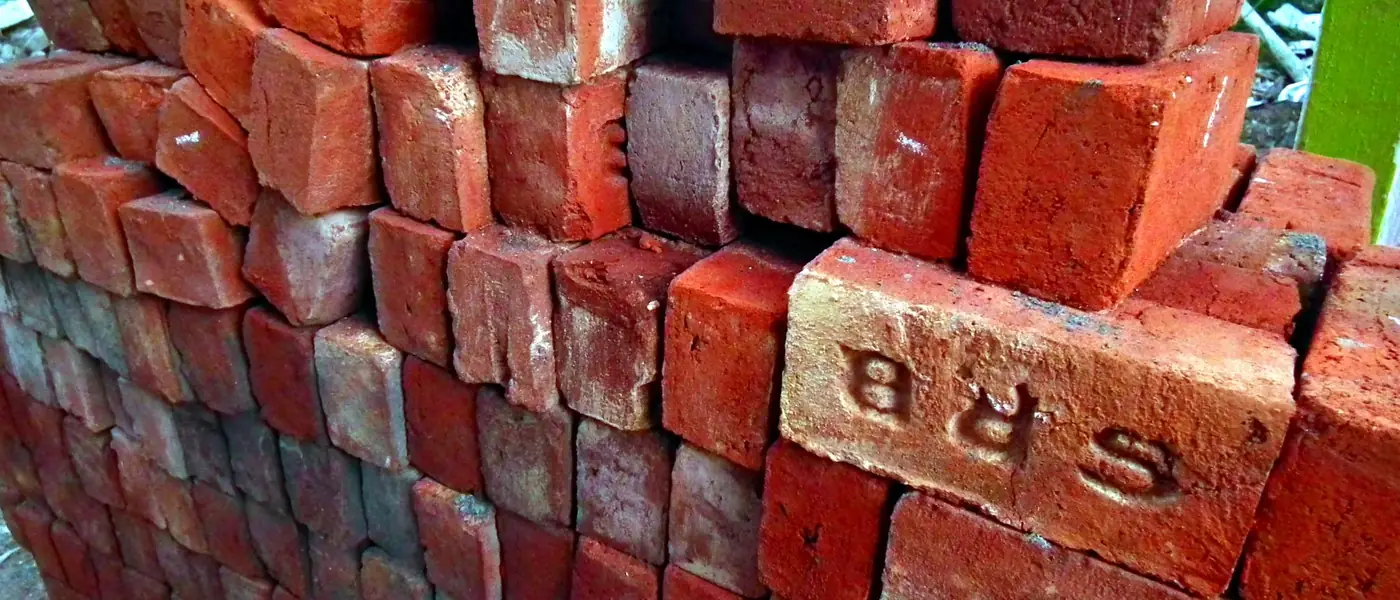
| Burnt clay (red) bricks | IS 1077 | 230 × 110 × 75 mm (conventional) or 190 × 90 × 90 mm (modular) | Familiar to every mason; good strength | Quality varies a lot between kilns |
| Fly ash bricks | IS 12894 | Similar to clay bricks | Uniform size, smooth faces, less plaster | Buy from a reliable plant; poor ones crumble |
| AAC blocks | IS 2185 (Part 3) | 600 × 200 mm face, 100–300 mm thick | About a third of the weight of brick; keeps rooms cooler; fast to lay | Needs thin-bed adhesive and careful chasing for pipes and wires |
| Solid or hollow concrete blocks | IS 2185 (Part 1) | 400 × 200 mm face, various thicknesses | Fast, strong, uniform | Heavy; walls can feel hot without insulation |
Lighter walls reduce the load on the frame and foundation, which is one reason AAC blocks have become popular for upper floors and apartments.
Field tests for clay bricks
You can reject poor bricks at the gate with a few simple checks:
- Shape and colour. Uniform deep red or cherry colour, straight edges and sharp corners. Pale, yellowish bricks are under-burnt and weak; very dark, twisted ones are over-burnt.
- Sound. Strike two bricks together. Good bricks give a clear, metallic ring; a dull thud means under-burnt or cracked.
- Scratch. A fingernail should not leave a mark on the surface.
- No cracks, pebbles or white lumps of lime in a broken brick.
- Efflorescence. Heavy white salt patches on the surface show soluble salts that will keep coming through the plaster.
The water absorption test
This is the test that matters most, and anyone can do it. Take a few bricks, dry them, and weigh them. Soak them in water for 24 hours, wipe the surface and weigh again.
WORKED EXAMPLE
Dry brick: 3.10 kg. After 24 hours in water: 3.62 kg.Absorption = (3.62 − 3.10) ÷ 3.10 × 100 = 16.8%.
IS 1077 allows up to 20% for common bricks, so this batch passes.
Bricks that absorb much more than this are porous and weak, and suck water out of the mortar before it can set.
Laying bricks and blocks well
- Soak clay bricks in water for a few hours before laying so they don't dry out the mortar. Do not soak AAC blocks; follow the manufacturer's instructions and use the recommended adhesive.
- Mortar mix. Commonly 1:6 (cement : sand) for full-brick walls and 1:4 for thin half-brick walls, unless your drawings say otherwise. The brick calculator works out bricks, cement and sand for any wall.
- Joints about 10 mm thick, fully filled, with vertical joints staggered course by course.
- Build no more than about 1 to 1.5 m of height a day so the lower courses can set.
- Cure the brickwork by keeping it damp for about 7 days.
- Tie infill walls to the frame. Where a wall meets a column, use the fixing your engineer specifies, and leave the recommended gap under the beam, to avoid cracks later.